 Khusnul Yaqin delivers an academic and moral appeal urging global leaders—particularly U.S. President Donald Trump—to abandon confrontation, respect dignity, and choose dialogue and peace over the arrogance of power.
By Khusnul Yaqin*
I offer this counsel to you, Donald Trump, not to display intellectual superiority or to assert dominance, but as an expression of moral responsibility for the common good, so that the world does not once again descend into a war that would devastate many without producing any true victor. I speak from an academic standpoint and from conscience, as a lecturer at Hasanuddin University, grounded in the conviction that knowledge, reflection, and dialogue must prevail over the arrogance of power. Our world today does not require confrontational rhetoric, but clarity of thought and the courage to choose the path of peace. If world leaders are willing to restrain ego, heed the voice of reason, and respect the dignity of other nations, then global peace is not a utopia, but a real and attainable possibility.
President Donald Trump, this advice is not born of animosity, but of scholarly responsibility and historical awareness. First, you would do well to reexamine your understanding of who Sayyid Ali Khamenei is—his lineage, his mode of worship, and the manner in which his life has been devoted to defending the dignity of the Iranian people and oppressed peoples worldwide. While many global leaders are absorbed in luxury and entertainment, he lives an ascetic life, engages in nightly supplication, and disciplines himself through learning and service. In this comparison, true strength is not measured by wealth or media attention, but by spiritual steadfastness and fidelity to the people and the oppressed. History repeatedly shows that sincere religious leaders are often endowed with moral authority and resilience that transcend political calculation—much like Moses in the Abrahamic tradition, whose story is also affirmed in Christianity and Judaism.
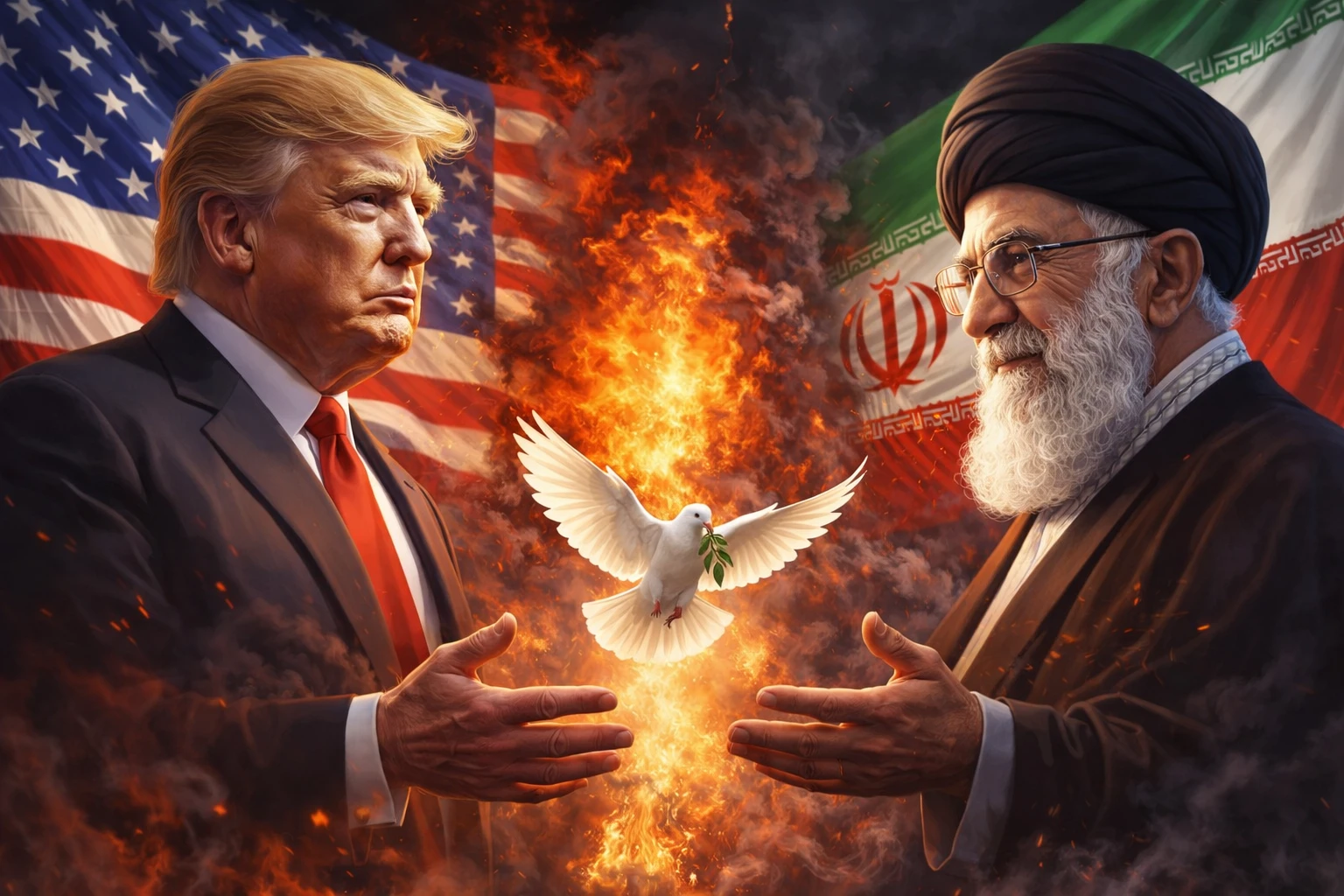
Amid the flames of conflict, peace remains a viable choice.
Second, the long record of United States policy toward the Islamic Republic of Iran reveals a consistent pattern: failure. Political pressure, economic embargoes, sabotage, and military intimidation have never succeeded in breaking Iran; instead, they have strengthened its independence and resilience. Repeating the same strategies while expecting different outcomes is neither sound nor wise policy. Therefore, abandon intentions and actions that only prolong tension and inflict harm upon the United States itself. Confrontation has never produced stability; it merely perpetuates cycles of destruction and deepening hostility.
Third, understand a fundamental truth about Muslims: we are not educated to fear death, but to live with honor. The Karbala tradition teaches that sacrifice for justice is not defeat, but dignity. Violence against Muslims will not extinguish faith; it will only reinforce it. Accordingly, attempts to subdue Iran through threats and coercion are a strategic illusion. Peace, recognition of dignity, and mutual respect are the only paths toward a better future.
Finally, if you genuinely wish to restore America’s moral standing in the eyes of the world, then make peace with the Islamic Republic of Iran and respect its spiritual leadership. Offering an apology to Sayyid Ali Khamenei and ending hostility is not a sign of weakness, but of greatness of soul. Sincere peace would be a blessing—for America, for Iran, and for global humanity. History does not always remember those who struck the hardest, but those who had the courage to halt injustice and choose the path of justice.
With sincere respect to you, your family, and the people of the United States.
*The author is a Professor at the Faculty of Marine Science and Fisheries, Hasanuddin University