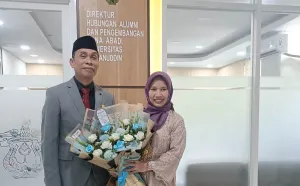
 Dr. Tahir Lawan Mua’z,—an Arabic lecturer at Bayero University Kano—sharing insights on the unique blend of faith, scholarship, and cultural traditions that shape the observance of Ramadan in northern Nigeria.
By Dr. Tahir Lawan Mua’z*
Ramadan, the ninth month of the Islamic calendar, holds a special place in the hearts of Muslims around the world. In Nigeria—the most populous country in Africa—Ramadan is observed with deep religious devotion and vibrant cultural traditions. While the core practices of fasting, prayer, and charity unite Muslims globally, the Nigerian experience of Ramadan reflects the country's rich historical and cultural heritage.
Historical Roots of Islam in Nigeria
Islam has a long history in Nigeria, particularly in the northern regions, where it has been present since around the 13th century through trans-Saharan trade and scholarly networks. Over the centuries, Islamic learning flourished in cities such as Kano, Katsina, and Sokoto.
A major turning point occurred in the early nineteenth century with the Islamic reform movement led by Sheikh Usman dan Fodio, which established the Sokoto Caliphate. This caliphate became one of the most influential Islamic states in Africa and laid the foundation for religious institutions that continue to shape Muslim life in northern Nigeria today.
Even today, traditional rulers known as emirs play an important role in religious affairs. The Sultan of Sokoto, regarded as the spiritual leader of Nigerian Muslims, officially announces the sighting of the crescent moon that marks the beginning and end of Ramadan.
The Beginning of Ramadan
On the 29th day of the Islamic month of Sha'ban, Muslims across Nigeria eagerly await the sighting of the new moon. Committees of observers are dispatched across the country to look for the crescent moon. Once a confirmed report is received, the Sultan of Sokoto announces the beginning of Ramadan, and the entire Muslim community prepares for a month of fasting and spiritual reflection.
This tradition of centralized moon announcement reflects the historical continuity of Islamic authority in Nigeria.
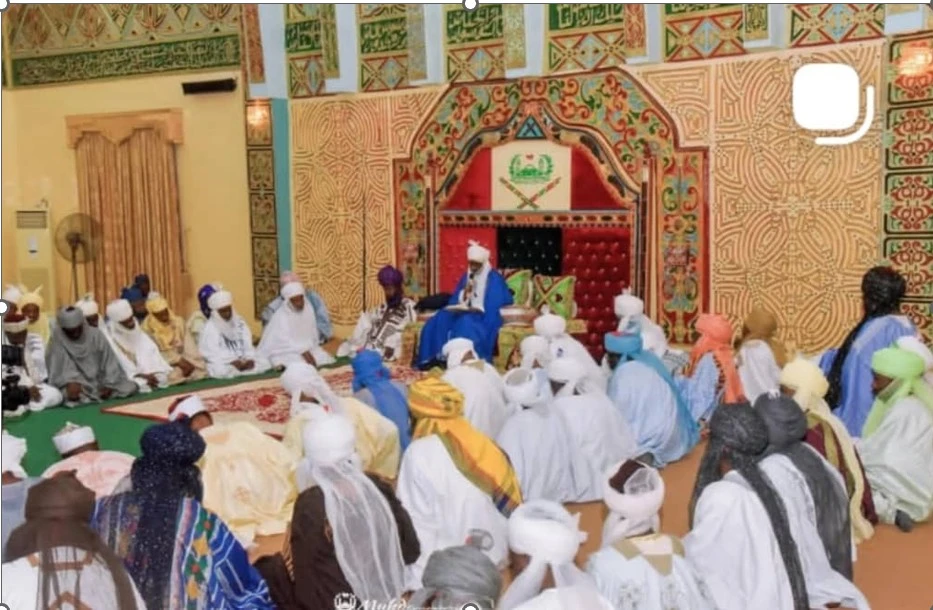
Emir o Kano announcing the sight of new Ramadan cresent
Religious Life during Ramadan
Ramadan in Nigeria is marked by intense religious activity. Mosques across the country become centers of worship, learning, and community gathering.
One of the most notable activities is the organization of Tafsir sessions, where Islamic scholars explain the meanings of the Qur’an. These lessons are held at various times throughout the day—some in the morning, others after the afternoon prayer, and many after the Tarawih prayers at night.
In addition to Qur’anic commentary, many scholars organize study circles dedicated to important Islamic texts. Among the most common are lessons on Sahih al-Bukhari, one of the most respected collections of the sayings of the Prophet Muhammad. Another widely attended tradition is the reading and explanation of Al-Shifa by Qadi Iyad, a famous work about the virtues and life of the Prophet.
For many participants, attending these gatherings is not only an intellectual exercise but also a way to strengthen their spiritual connection during the holy month.
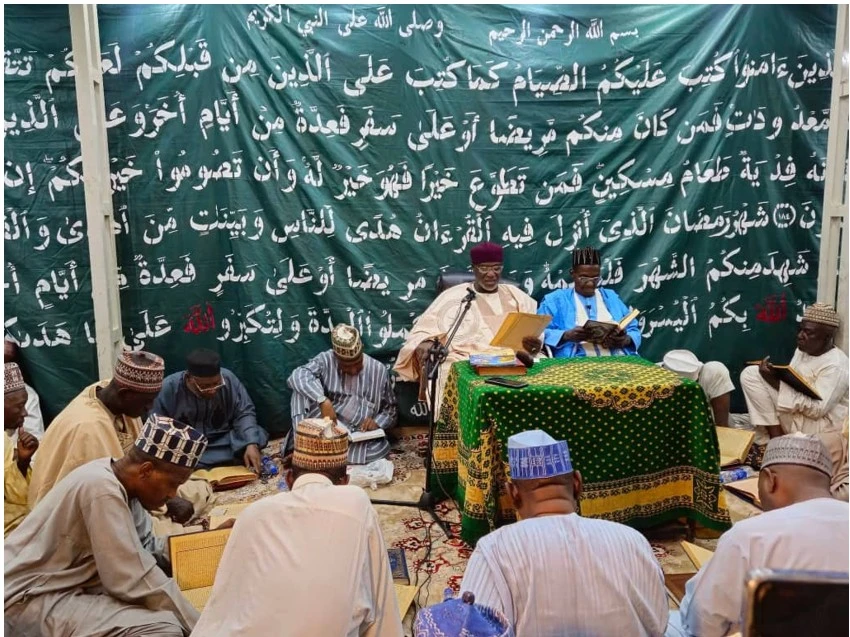
Majlis of Tafsir Kano City
Iftar and Family Traditions
At sunset, Muslims break their fast with iftar, traditionally beginning with water and dates following the example of the Prophet Muhammad. In many Nigerian mosques, worshippers gather to break their fast together before performing the Maghrib prayer.
However, among the Hausa people of northern Nigeria, it is common for families to return home after the prayer to share the main meal together. These family gatherings reinforce strong social bonds and make Ramadan a deeply communal experience.
Cultural Expressions: The Tradition of Tashe
Beyond its religious observances, Ramadan in northern Nigeria is also accompanied by a number of cultural practices that reflect the social life and historical memory of Hausa communities. One of the most distinctive of these traditions is Tashe, a form of performative street theatre that has long been associated with Ramadan nights.
The term Tashe in the Hausa language literally means “to awaken,” originally referring to the act of waking people for the pre-dawn meal (sahur). Over time, however, the practice evolved into a communal performance tradition that combines music, drama, satire, and social commentary. During Ramadan evenings, groups of children and young people—sometimes accompanied by adults—move through neighbourhoods dressed in colourful costumes. They perform short dramatic sketches, rhythmic drumming, and songs that often draw upon historical narratives, moral lessons, or everyday social experiences.
Anthropologically, Tashe functions not only as entertainment but also as a mechanism of social communication and cultural transmission. Through humour and satire, performers address social norms, collective values, and communal expectations. For instance, some Tashe performances feature a character known as Nalako, often described as a “bachelor hunter.” In traditional Hausa society, prolonged bachelorhood was socially discouraged, as marriage was viewed as an important step toward social responsibility and moral maturity. The Nalako character humorously “hunts” or mocks unmarried men, symbolically urging them to awaken—both literally and metaphorically—to their social obligations.
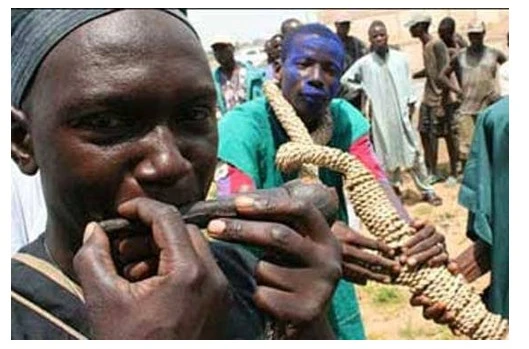
Bachelors hunter NALAKO performance during Ramadan
These performances are typically rewarded by householders with small gifts, food, or money. In this way, Tashe strengthens neighbourhood solidarity while also reinforcing shared cultural values. Although modern urban life and changing social patterns have reduced its prevalence in some areas, Tashe remains an important example of how local cultural expression becomes intertwined with the spiritual atmosphere of Ramadan.
The Final Days and Eid Celebrations
The last ten days of Ramadan are considered especially sacred. Many Nigerian Muslims devote themselves to additional prayers and spiritual retreat known as i'tikaf, usually observed in major mosques.
Night prayers, particularly Tahajjud, become more frequent as believers seek the blessings of Laylat al-Qadr—the Night of Power.
On the 29th day of Ramadan, Muslims once again search for the new crescent moon to determine whether the fasting month has ended. When the moon is sighted, the Sultan of Sokoto announces the celebration of Eid al-Fitr.
The Splendor of the Durbar Festival
Eid celebrations in northern Nigeria are among the most spectacular in the Muslim world that siginifying the end of Ramadan. One of the most famous events is the Durbar festival, particularly in the ancient city of Kano.
During this festival, emirs lead magnificent horse-riding processions through the city. Riders dressed in elaborate traditional attire parade on decorated horses, accompanied by royal guards, musicians, and large crowds of spectators.
The festival attracts visitors and tourists from across Nigeria and around the world. In recognition of its cultural significance, the Kano Durbar was inscribed by UNESCO in December 2024 as an Intangible Cultural Heritage of Humanity.
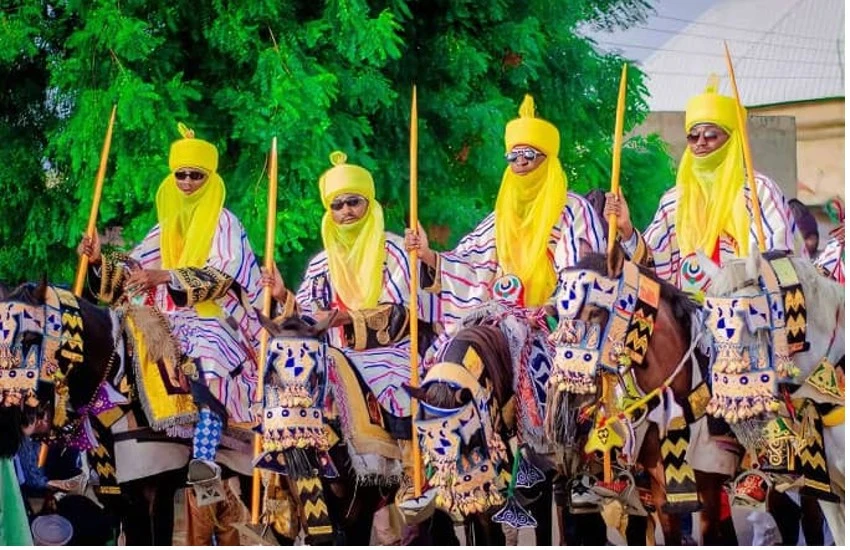
Part of Eid el-Fitr Sallah Celabration in Kano City.
A Month of Faith and Community
Ramadan in Nigeria illustrates how Islamic devotion and cultural heritage can harmoniously coexist. From Qur’anic study circles and night prayers to community performances and royal celebrations, the month becomes a time of spiritual renewal, social unity, and cultural expression.
For visitors and observers from Asia and other parts of the world, the Nigerian Ramadan offers a fascinating example of how a global religious tradition adapts to local cultures while preserving its essential spiritual values.
Author, Lecturer in Arabic at Bayero University Kano